Baking
Kiwi Drizzle Cake
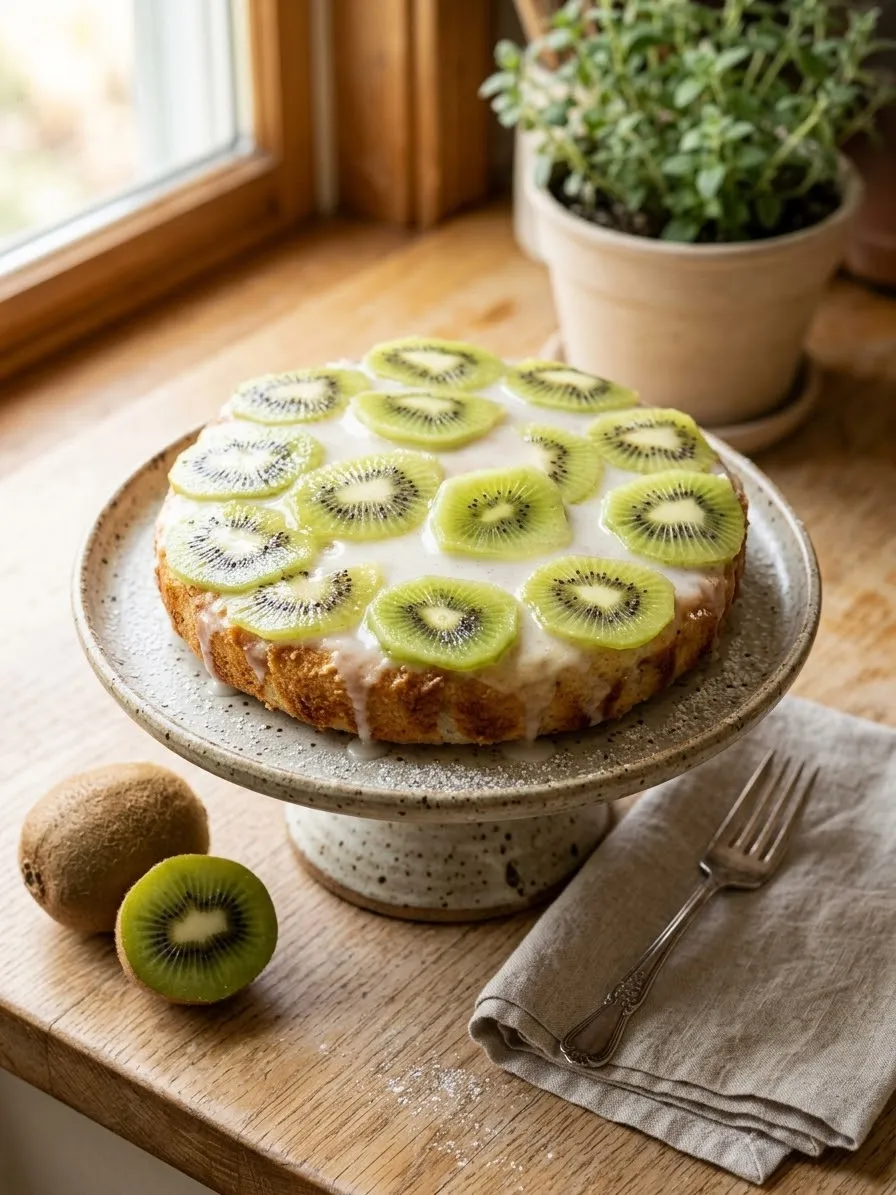
Two kiwis go into the blender whole with the eggs, sugar and oil, and what comes out is the batter — no creaming, no mixer, and nothing to bring to room temperature first. The kiwi does not shout once it is baked; it keeps the crumb damp and green-flecked and gives the sponge a faint sharpness that olive oil and vanilla round off. A lemon drizzle in all but the fruit: fifteen minutes and one bowl behind it, then a vanilla icing poured over the cooled sponge and fresh kiwi laid into it before it sets.
Makes 8" round cake (8-10 slices) · Prep 15 mins · Cook 35 mins · 12 ingredients · 7 steps
Ingredients
- 2 kiwis (peeled and sliced)
- 2 eggs
- 135g caster sugar
- 80ml olive oil
- 2 tsp vanilla extract
- 125g plain flour
- 1 tsp baking powder
- 1 pinch salt
- 120g icing sugar (for the icing)
- 2 tbsp milk (for the icing)
- 1/4 tsp vanilla extract (for the icing)
- 1 kiwi (sliced, to decorate)
Method
Cake
- Heat the oven. Preheat your oven to 180C/160C Fan and line an 8" round cake tin with baking paper.
- Blend the wet ingredients. Peel and slice the kiwis into the blender, then add the eggs, caster sugar, olive oil and vanilla extract. Pulse for a few seconds, just until it is smooth and pale green — long enough to break the fruit down and no longer.
- Fold in the dry ingredients. Pour the blended mixture into a medium bowl and sift the flour over it in two or three goes, adding the baking powder and salt with the last of it. Mix only until the last streak of flour disappears; this is a batter that turns rubbery if you keep going.
- Bake the cake. Pour the batter into the prepared tin and bake for 30-35 minutes, until golden on top and springy in the middle — a skewer pushed into the centre should come out clean.
- Cool it. Leave the cake in the tin for 15 minutes to firm up, then turn it out onto a wire rack and let it cool completely before it goes anywhere near the icing.
Icing
- Mix the icing. Stir the icing sugar, milk and vanilla together in a small bowl until smooth and thick enough to fall off the spoon in a ribbon. Loosen it with a few more drops of milk, or thicken it with another spoonful of icing sugar, until it pours the way you want it to.
- Drizzle and decorate. Pour the icing over the cooled cake and let it run down the sides, then lay slices of fresh kiwi over the top before it sets.
Good to know
- Ripe kiwis are the ones to use — they should give under a thumb like a ripe pear. A firm, under-ripe one blends fine but brings a sourness the sugar cannot quite cover.
- No blender needed if you have a stick blender or a mini food processor; either does the kiwi, eggs, sugar and oil in the same few seconds. Blitz the fruit alone and whisk the rest in by hand if that is all there is.
- Blend the wet ingredients, then stop. Kiwi seeds break up if the machine keeps running and turn the crumb grey rather than green-flecked.
- Olive oil is not doing anything olive oil has to do — coconut oil, avocado oil or the same weight of melted butter all work, and a light olive oil keeps the fruit at the front if the bottle you have is a peppery one.
- Sift the flour rather than tipping it in. There is no creaming stage to break lumps up later, and a sifted batter needs far less mixing to come together.
- The drizzle is what makes it one, but the sponge stands up without it. Left bare this is a plain, damp afternoon cake; iced, it is sweet enough to end a meal on.
- Ice only a completely cold cake. Warm sponge drinks the icing straight down into the crumb instead of setting into a layer on top.
- Fresh kiwi on top is best added on the day it is eaten; the slices weep a little overnight and bleed into the icing.
- Store leftovers in an airtight container in the fridge, where it keeps for 3-4 days.