Lunch
Mayonnaise Omelette
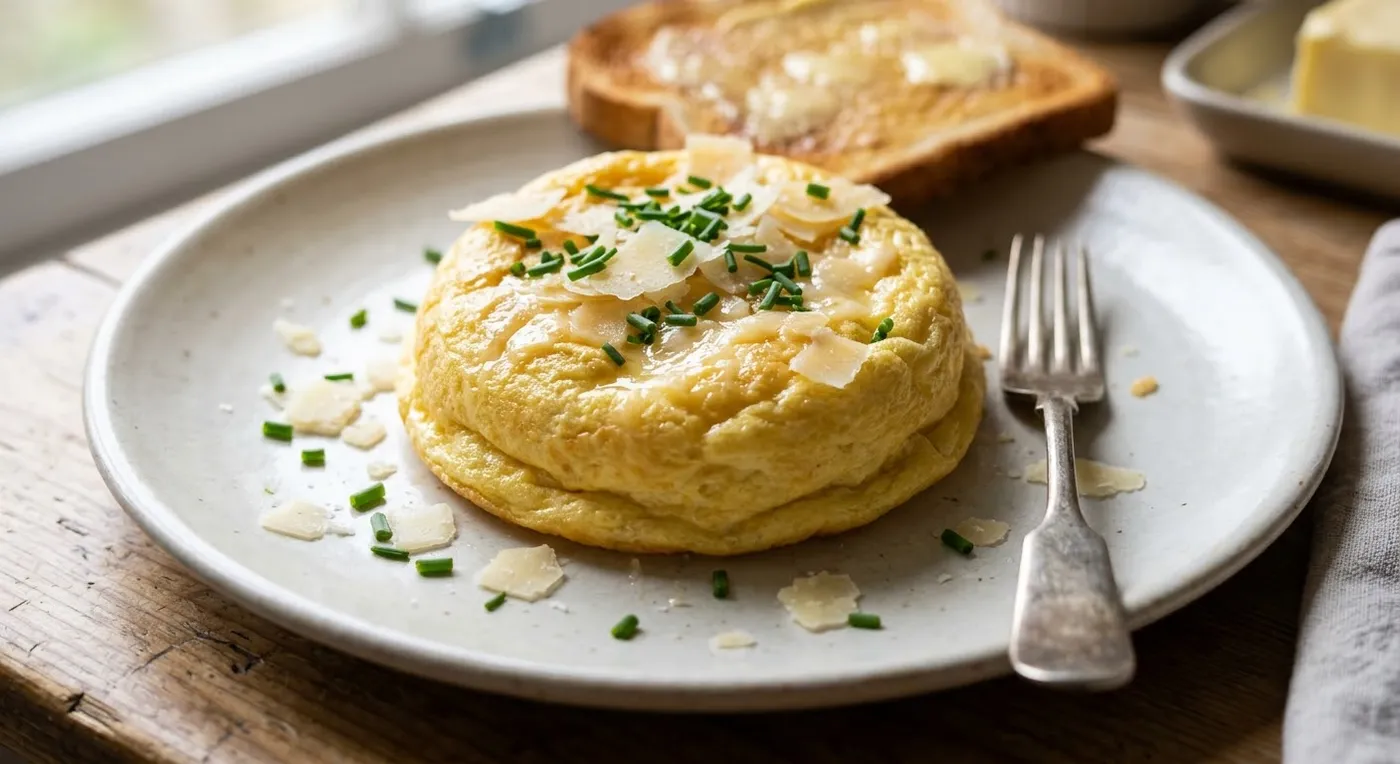
One egg mixed with a spoonful of mayonnaise and cooked in the microwave for about 40 seconds. The mayonnaise keeps it soft and fluffy instead of rubbery. It's a José Andrés idea.
Makes 1 person · Prep 2 mins · Cook 40 secs · 6 ingredients · 5 steps
Ingredients
- 1 large egg
- 1 tbsp mayonnaise (15g)
- 5g butter (or 1 tsp olive oil, for greasing)
- Salt and black pepper (to taste)
- 5g Parmesan cheese (shaved, optional)
- 2g chives (finely chopped, optional)
Method
- Whisk the egg and mayo. Crack the egg into a small bowl, add the mayonnaise, a pinch of salt and a grind of pepper, and whisk properly — 30 seconds, until it is one even pale yellow with no ribbons of mayonnaise left in it. Any lump that survives the bowl will be a greasy patch in the omelette.
- Grease the ramekin. Rub the butter around the inside of a ramekin, base and sides both, right up to the rim — the omelette climbs as it cooks, and wherever it touches bare dish it sticks.
- Fill the ramekin. Pour the mixture in. It should sit no more than halfway up, because it puffs to something like twice its height before it settles.
- Microwave for 40 seconds. Cook on full power for 40 seconds. It is done when it has risen and the surface is set but still glossy — a little wobble at the centre is right, as it keeps cooking for a few seconds after the door opens.
- Plate up and finish. Run a knife around the edge and turn it out onto a warm plate, puffed side up. Shave the Parmesan over while it is hot enough to soften it, scatter the chives, and eat it straight away.
Good to know
- Microwaves differ more than recipes admit. Forty seconds is right for an 800W oven; at 1000W start looking at 30, at 600W give it closer to a minute. Whatever yours is, go back in ten-second bursts rather than guessing high — an omelette taken ten seconds too far turns from custard to sponge and there is no coming back.
- The mayonnaise is doing real work, not standing in for anything. It is an emulsion of oil and egg yolk, so it brings both fat and lecithin to the party: the fat gets between the egg proteins and keeps them from tightening into rubber, and the emulsifier holds the whole thing creamy. That is the widest margin for error you will ever get on a microwaved egg.
- Use a proper full-fat mayonnaise. Light versions are mostly water and thickener, which is the one thing this recipe cannot use — you get a wetter, flatter omelette and none of the insurance. Kewpie, with its extra yolk and its rice vinegar, is very good here.
- A 7–9cm ramekin is the sweet spot. Wider and the omelette spreads thin and overcooks at the edges before the middle sets; narrower and it climbs out of the dish. A small mug does the job in a pinch, though it makes a taller, more soufflé-ish omelette.
- Rest a saucer over the top if your microwave is a spitter. It also traps a little steam, which keeps the surface from drying.
- Cooking for two? Two ramekins side by side, and add roughly half again to the time — around 60 seconds — rather than doubling everything into one dish, which cooks unevenly and never rises the same way.
- Parmesan and chives are the classic finish, but this is a blank canvas: a dash of hot sauce, a spoon of chilli crisp, a few drops of truffle oil, grated Cheddar stirred in before it cooks, or smoked salmon draped over afterwards.
- It sits well on hot buttered toast — the omelette turns out in one piece and lands on the bread like a lid, which is the fastest breakfast sandwich in the book.
- No microwave, or no faith in one? The same mixture goes into a small non-stick pan over a low heat with the butter, stirred gently for a minute or two. Less dramatic, still noticeably softer than the same egg without the mayonnaise.