Desserts
Plum Tarte Tatin
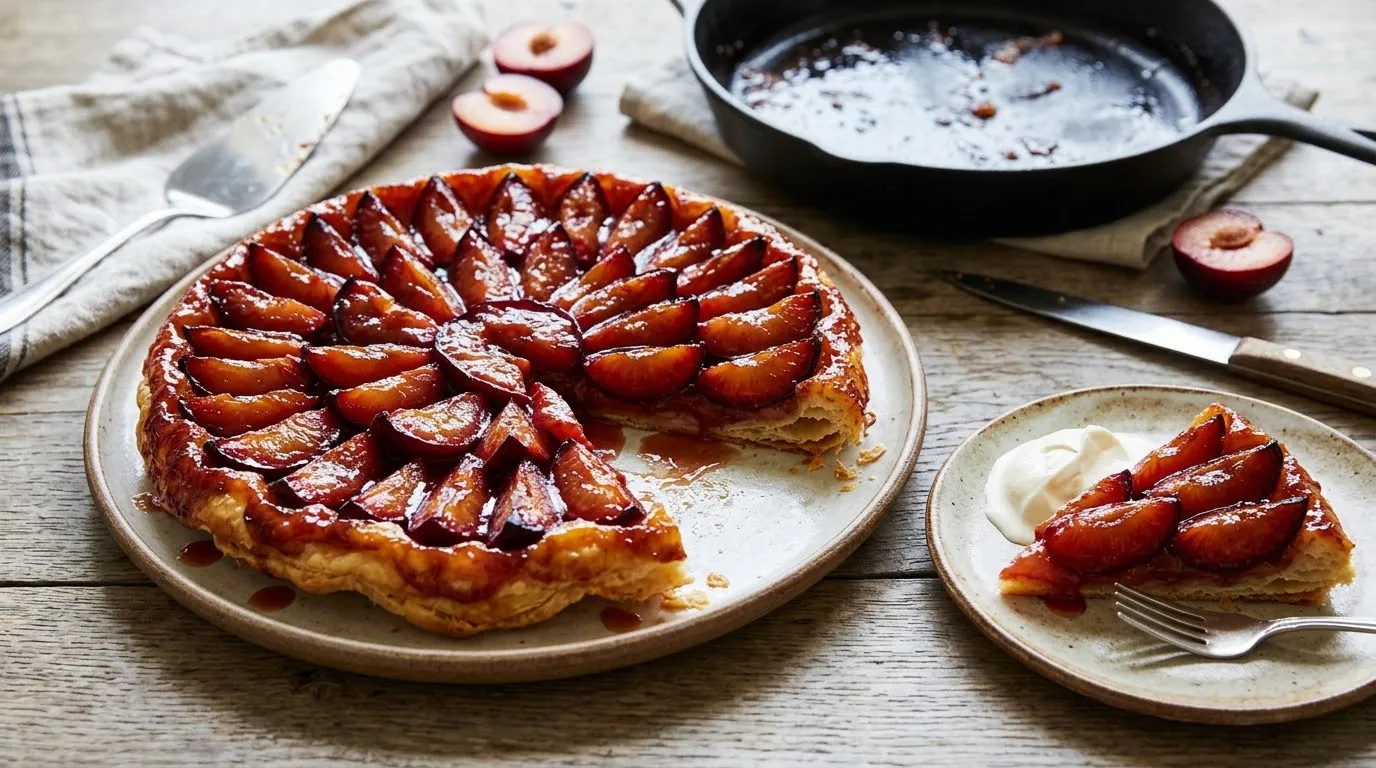
Six plums, a knob of butter and four spoons of brown sugar, built upside down in the dish you bake it in and turned the right way up onto a plate at the very last second. The plums go into the caramel first and come out of the pan still firm — the oven is what finishes them, and plums that were soft in the pan are jam by the time the pastry is golden. Puff pastry goes over the top like a lid, tucked down the sides so nothing can bubble up past it, which means the fruit steams underneath while the top crisps. Flip it, and the side that spent half an hour hidden in the caramel is the side you serve.
Makes 1 tarte (4 slices) · Prep 15 mins · Cook 35 mins · 7 ingredients · 11 steps
Ingredients
- 6 plums (or as many as will fill your dish)
- 30g unsalted butter
- 4 tbsp soft brown sugar
- 1/4 tsp ground cinnamon (optional)
- 320g ready-rolled puff pastry (1 sheet)
- 1 egg (optional, to glaze the pastry)
- 1 splash milk (optional, to glaze the pastry)
Method
- Heat the oven. Preheat the oven to 200C/180C Fan and find an ovenproof dish or skillet the tarte will fill — one the plums sit snugly in rather than rattle around, because the pastry lid has to reach the sides.
- Prepare the plums. Halve each plum, twist the two sides apart and lift out the stone, then slice each half into three or four wedges. Any that cling to the stone are best cut off it rather than wrestled free; a bruised wedge falls apart in the caramel.
- Start the caramel. Melt the butter in a pan over a medium-low heat and, while a few streaks of it are still solid, add the brown sugar and the cinnamon if you are using it. Stir until it comes together as a loose, glossy syrup — not a hard caramel, which is what happens if the heat goes up and the sugar is left alone.
- Cook the plums briefly. Tip the plums in and turn them through the syrup for 5 minutes, until the edges have softened and the caramel has taken on their colour. Stop while they still hold their shape and push back against the spoon; they have 30 minutes in the oven ahead of them and that is where they finish.
- Cut the pastry. Unroll the pastry and cut a circle a couple of centimetres wider than the top of your dish, using the dish itself upside down as the template and cutting outside the line it leaves.
- Fill the dish. Lift the plums into the dish with a slotted spoon and arrange them in a single close layer, cut sides down. Leave the loosest of the syrup behind in the pan: what looks like flavour now is the puddle that soaks the pastry later.
- Cover with pastry. Lay the pastry circle over the fruit and push the overhang down between the plums and the side of the dish, all the way round, as though tucking in a bedsheet. That seal is what stops the caramel bubbling up over the top and setting the tarte into the dish.
- Glaze the top. Beat the egg and brush it over the pastry, or use a splash of milk for a softer, paler finish. Pierce the middle once with the tip of a knife to give the steam somewhere to go.
- Bake until golden. Bake for 30 minutes, until the pastry is puffed, deep golden and dry to a tap, with caramel visibly bubbling at the edges.
- Flip it out. Let it settle for 2 minutes — long enough to stop the caramel running everywhere, short enough that it has not set and glued itself down. Put a plate face down over the dish, hold both together with a cloth, and turn the whole thing over in one committed movement.
- Serve it warm. Lift the dish away, nudge back any plums that stayed behind, and serve it warm with ice cream or cream.
Good to know
- Do not overcook the plums in the pan. Five minutes over a medium-low heat is a softened edge and no more; anything further and what comes out of the oven is a purple compote under a pastry hat rather than a tarte with fruit you can still see the shape of.
- Liquid is the enemy, and soggy pastry is what it costs you. Slightly firm, slightly under-ripe plums hold their juice rather than weeping it, which is exactly why they work better here than the ripest ones in the bowl.
- Four tablespoons of sugar suits a sharp plum. Taste one raw before you start: a sweet, ripe plum is happier with three, and a mouth-puckeringly sour one will take five.
- Cinnamon is optional and easily swapped. A star anise dropped into the butter, a strip of orange zest, or a splash of vanilla all take it somewhere different without changing anything else about the method.
- The egg wash gives the glossiest, deepest colour; milk gives a softer matte finish. Neither is essential — unglazed pastry browns perfectly well, it just looks like it was not thought about.
- Any dish that can go on the hob as well as in the oven saves you a step: make the caramel in it, arrange the plums straight back in and put the pastry lid on there.
- Flip it while it is warm. Left to cool in the dish the caramel sets, and what comes out is the tarte in pieces with the best of it still stuck to the base.
- Apples are the original, and pears, nectarines, apricots or peaches all take the same treatment. Red onion, with a splash of balsamic in place of some of the sugar, makes the savoury version — served with something sharp and white, it is a starter rather than a pudding.
- It is at its best within an hour of coming out of the oven, while the pastry is still crisp underneath the fruit. Leftovers keep in the fridge for 2 days and are worth 10 minutes in a hot oven rather than the microwave.